Neeraj Vora

Neeraj Vora

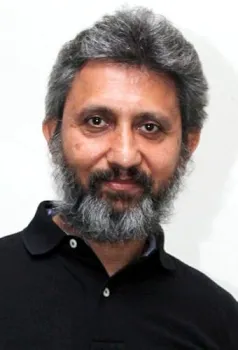
Neeraj Vohra was born on January 22, 1963 in Bhuj, Gujarat. But he grew up in Santacruz, a suburb of Mumbai. His father, Pandit Vinayak Rai Nanalal Vohra was a classical musician and a proponent of Tar-Shehnai. His father popularised Tar-Shehnai as the solo instrument for classical music. He is an Indian film director, producer, actor, writer & composer. As a child, Vora had no access to Bollywood movies. As he hailed from a classical musician's family, listening to film music and watching films was not allowed. His mother Premila Ben had a tremendous fascination for films, and she used to secretly take her son to watch movies. Vora went to famous Pupils' Own School in Khar, Mumbai. Many famous celebrities such as Falguni Pathank, Kinjal Bakshi, Tina Munim were his compatriots at this school. Many students from his school used to attend music coaching classes conducted by his father, who insisted on teaching classical Indian music while Vorawould sneakily teach them how to play Bollywood songs on harmonium. This made Vora very popular at the school. Luckily, a lot of Gujarati drama stalwarts followed his father's work and knew him personally, following which he got inclined towards Gujarati theatre. His love for theatre began at the age of 6, and when his father discovered this at the age of 13, he supported Vora and asked him to follow his passion. He had worked in many successful Bollywood blockbusters like Khiladi 420 (2000), Hera Pheri (2000), Phir Hera Pheri (2006), Hello Brother (1998), Khatta Meetha (2010), Familywala (2009), Shortkut: The Con Is On (2009), Hungama (2003), Garam Masala (2005) etc. Vora, who had been suffering from an illness for a long time, died at the age of 54 on December 14, 2017. He was reportedly in a coma for 13 months after suffering from a massive heart-attack and brain stroke. He reportedly breathed his last at 4 am at Criti Care hospital in Andheri, Mumbai. Vora had been staying at film producer Firoz Nadiadwala's house since October 2016 as they were working on film Hera Pheri 3 after slipping into coma due to a heart-attack followed by a brain stroke. Nadiadwala had brought him to his home and converted a room into a make-shift Intensive Care Unit (ICU).
Neeru Bajwa

Neeru Bajwa

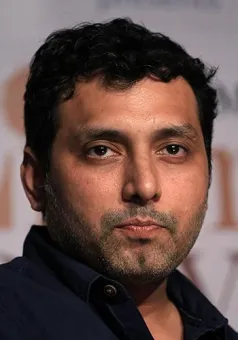
Neeru Bajwa is a Canadian actress, director, and producer who has worked predominantly in Indian cinema, specializing in Punjabi and Hindi films. Born in Canada, Bajwa originates from Vancouver and began her entertainment career in 1998 with her debut in Dev Anand's Hindi film "Main Solah Baras Ki." Following her initial foray into Bollywood, she transitioned to working in Hindi television soap operas before establishing herself in the Punjabi film industry. Bajwa has since become one of the highest-paid actresses in Punjabi cinema, starring in commercially successful films including "Jatt & Juliet" (2012), "Jatt & Juliet 2" (2013), "Sardaar Ji" (2015), "Laung Laachi" (2018), "Shadaa" (2019), "Kali Jotta" (2023), and "Jatt & Juliet 3" (2024). Her career has expanded beyond acting to include directing and producing projects within the entertainment industry. Bajwa's contributions to Punjabi cinema have earned her recognition as a three-time PTC Punjabi Film Award recipient, and she has received multiple Best Actress awards from this platform dedicated to acknowledging talent in Punjabi entertainment. Her professional achievements have led to recognition as one of the most influential women in the Canadian Punjabi community, with over 50 films to her credit throughout her career. Bajwa's work has contributed significantly to the commercial and artistic development of contemporary Punjabi cinema, establishing her as a prominent figure in both Canadian and Indian entertainment industries.

APK para TV

Apk para móvil